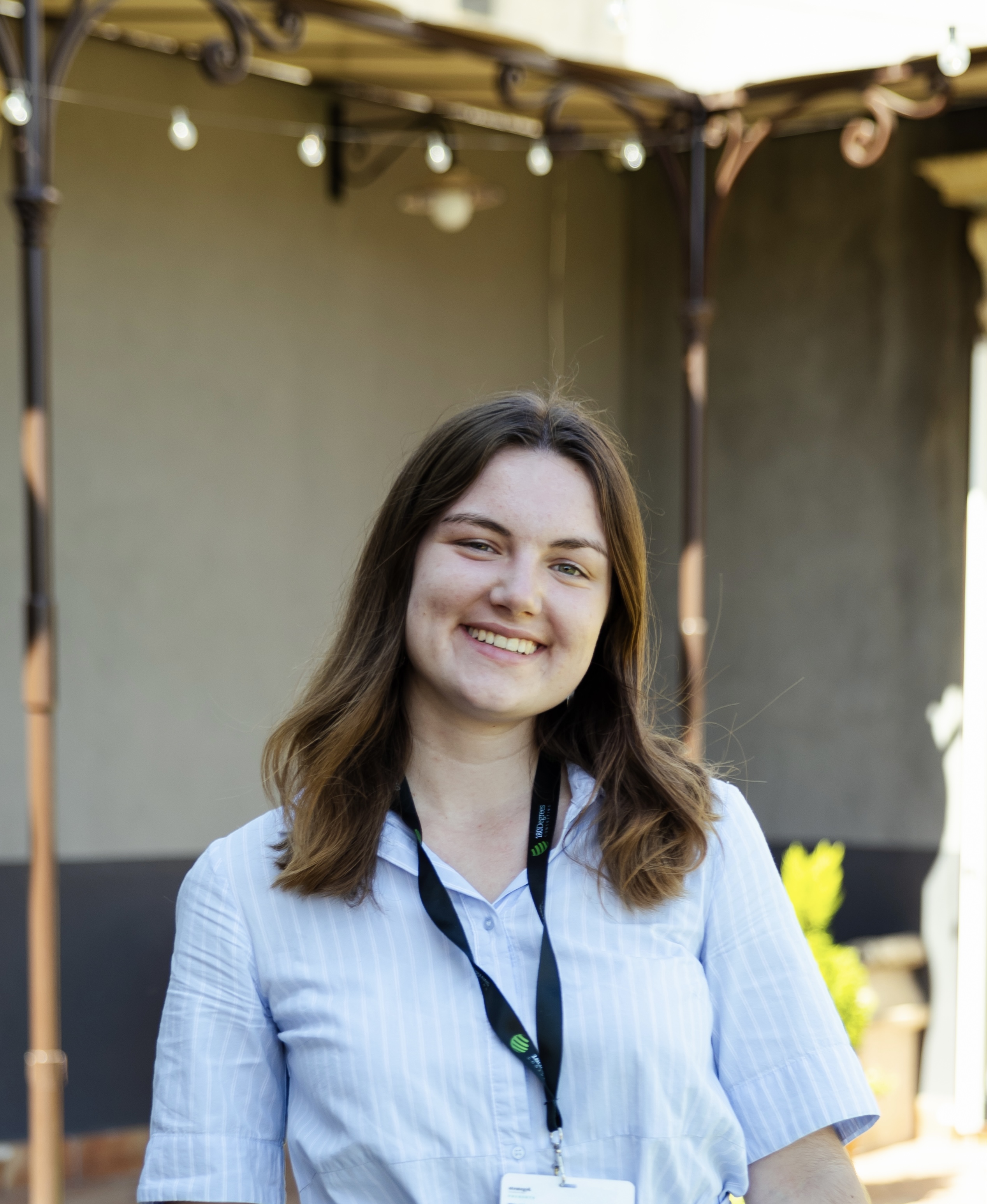
As a final year undergraduate at Minerva University, I have developed a global perspective on my area of study (Economics & Politics) across 6 international cities (San Francisco, Seoul, Berlin, Buenos Aires, Taipei, Hyderabad). For my Bachelor's thesis, Effective Thesis connected me with the Charity Entrepreneurship-incubated NGO NOVAH (No Violence At Home). NOVAH uses edutainment radio shows to prevent intimate partner violence, and I got to evaluate their new 12-episode radio drama in Rwanda, which led to tangible improvements of their program. I aim to maximize the impact of my career and am exploring where my skills and interests best align - across social impact consulting, global development, policymaking, and international organizations. Outside of academics and professional development, I love making music (I’m playing the saxophone and the piano), especially with other people! I also like learning new languages, unwind by being in nature, and enjoy a wide range of sports (e.g., swimming, ice-skating, yoga).
Thesis Title: Preventing Intimate Partner Violence in Rwanda Through Edutainment: A Pilot-Stage Evaluation
Despite Rwanda’s strong formal anti-gender-based-violence (GBV) framework, intimate partner violence (IPV) remains highly prevalent, suggesting that entrenched norms continue to shape behavior. This study evaluates season 2 of NOVAH’s edutainment radio drama “Twubakane,” which aims to prevent IPV by promoting shared decision-making through healthy communication, reduced alcohol consumption, and early help-seeking. Using a mixed-method pilot design (n=60 participants across three villages), including surveys, focus group discussions, in-depth interviews, and observational data, the study assesses preliminary attitudinal and behavioral effects as well as potential risks prior to large-scale rollout. Suggestive associations from pilot evidence point to positive short-term shifts in attitudes and self-reported behaviors regarding communication and alcohol consumption. However, responses to help-seeking were mixed, with some participants supporting endurance of violence and expressing reluctance to involve formal authorities. The study highlights the promise and the limitations of edutainment in IPV contexts where norms counteract formal legal frameworks. The findings informed targeted script adaptations and provide mechanism-level insights for a forthcoming randomized controlled trial.
My work for NOVAH (No Violence At Home, an international NGO that aims to prevent intimate partner violence through mass media, with current operations in Rwanda) led to tangible recommendations and improvements of their radio program's script, which mitigated some identified risks and clarified the messaging. The full report can be found here: novah.ngo/qual-eval-twubakane-s2, a short-form report can be found here: https://gamma.app/docs/Copy-of-Twubakane-Season-2-Evaluation-Results-final-4ad7fe3r136cazg?mode=doc. NOVAH's feedback also indicated that my involvement in the design of the study significantly improved its quality and rigor.
The most valuable part was that Effective Thesis connected me to NOVAH as a part of the Fellowship, which enabled me to do high-impact field research. I primarily used coaching by Christine. It was great to have her mentorship alongside working with NOVAH, and I really appreciate that she keeps supporting me with my career journey.
Besides the tangible improvements of NOVAH's radio drama, which will hopefully lead to the prevention of intimate partner violence in the long-term, I learned a lot about fieldwork and the unforeseen challenges that come with it, the differing realities of academia vs. NGO work, and the value of doing qualitative research such as focus group discussions and interviews. One of the potential career paths I foresee for myself is work in development, and I hope that this hands-on experience gives me a unique edge.
I also hope that some of the coming generations at my university, inspired by my work with NOVAH and Effective Thesis, will pursue more impactful thesis projects.
If anything, I wish I had reached out to Effective Thesis earlier. As a generalist and as someone interested in many different areas, I found it hard to choose a very specific thesis topic that is appropriately scoped. Rather than doing theoretical research with no practical use case, I wanted my thesis to have some practical impact, even if small. Effective Thesis provided me with the NGO connections and suggestions for scoped projects.
I also would tell my younger self to think deeply about what I want to get out of my thesis project. While I had a list of criteria - 1) Career capital/learn skills, 2) impact, 3) excitement about the research area - I would have told myself to think earlier and more deeply about potential career paths, and check for the kind of skills the job descriptions aligned with those paths list, and align my thesis project with those.Lastly, I would tell myself to reach out to external mentors/researchers more broadly to learn about how they approach doing research, and to gather their advice for my project - especially at the beginning of my project where I had to design my study.
Whether you’re a student, expert, or organistion, join us in supporting the next generation of people using research and their careers to tackle global challenges.